AMC
AMC
BIO FERTILIZER
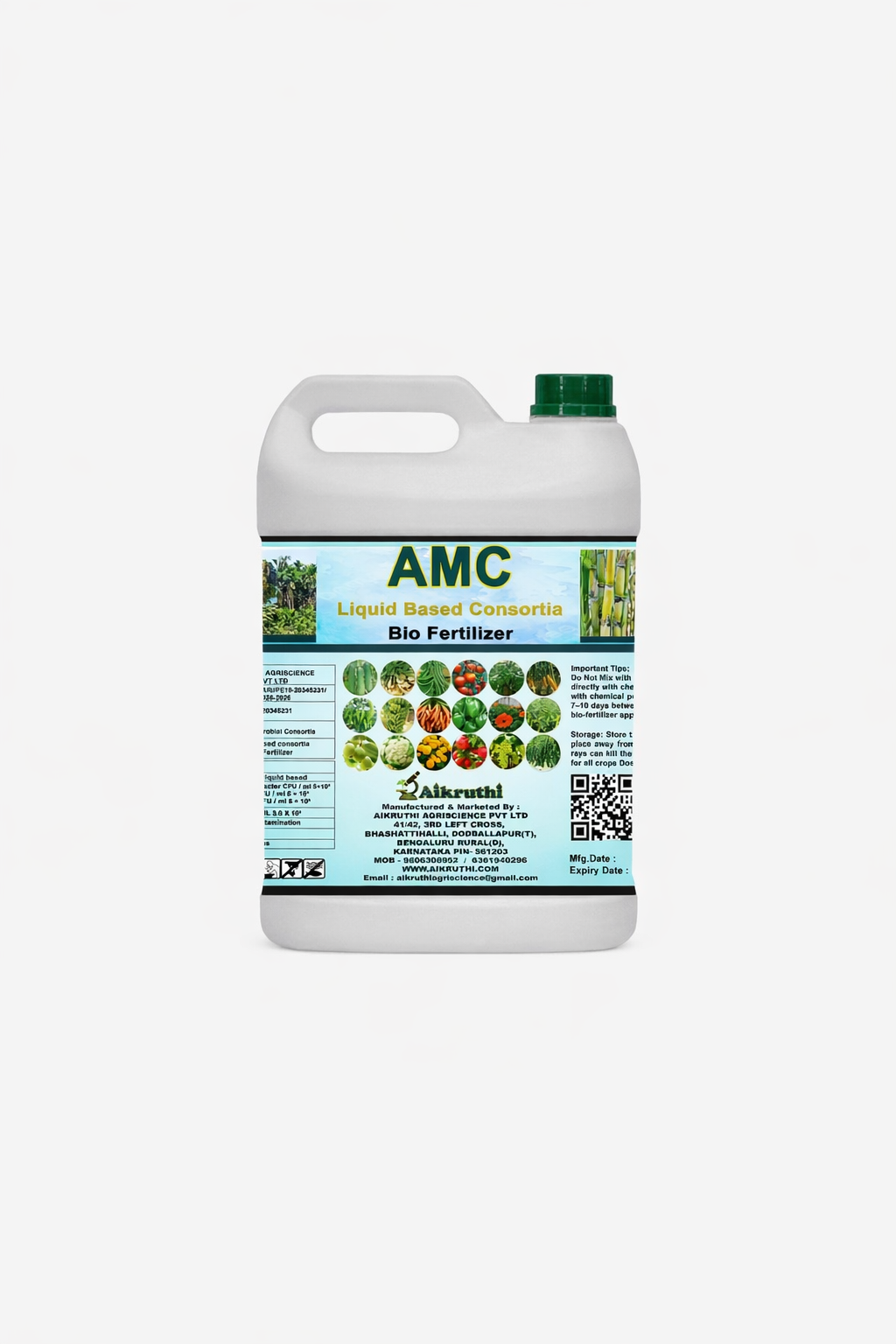
Aikruthi Liquid Microbial Consortium bio-fertilizer designed to enhance soil health and crop yield. It contains a blend of beneficial bacteria, including Nitrogen-fixing, Phosphorus-solubilizing, and Potassium-mobilizing bacteria.
A biofertilizer microbial consortium is a blend of different beneficial microorganisms that work together to provide a complete nutrient package to plants.
A consortium containing PSB, KMB, and Azotobacter is essentially a "Microbial NPK" factory, providing Nitrogen (N), Phosphorus (P), and Potassium (K) naturally.
Here is a breakdown of how this specific consortium works and how to use it:
1. The Power Trio: Core Components
Each microbe in this mix has a specific "job" to ensure the plant gets the nutrients it needs:
|
Microbe |
Full Name |
Primary Function |
How it Works |
|
Azotobacter |
Azotobacterchroococcum |
Nitrogen Fixer |
Converts atmospheric nitrogen ($N_2$) into ammonia, making it available for plant uptake. |
|
PSB |
Phosphate Solubilizing Bacteria |
Phosphorus Provider |
Secretes organic acids that dissolve "locked" or insoluble phosphorus in the soil. |
|
KMB / KSB |
Potash Mobilizing/Solubilizing Bacteria |
Potassium Provider |
Breaks down complex potassium compounds in the soil, making them accessible to roots. |
2. Key Benefits of Using a Consortium
Using these three together is far more effective than using them individually because of their synergistic effect:
- Balanced Nutrition: It provides all three major macronutrients (NPK) simultaneously.
- Growth Promotion: These bacteria also produce natural growth hormones like Auxins, Gibberellins, and Cytokinins, which boost root and shoot development.
- Soil Health: They improve soil structure and increase the population of other beneficial soil microbes.
- Cost Reduction: Regular use can reduce the need for chemical fertilizers (like Urea, DAP, and MOP) by 20% to 30%.
- Environmental Safety: They are 100% organic, non-toxic, and do not leave harmful residues in the soil or groundwater.
Key Benefits
The product is marketed as a "Liquid Bio-Fertilizer" suitable for all types of crops. Its main advantages include:
- Nutrient Fixation: Fixes atmospheric nitrogen in the soil and makes phosphorus and potassium available to the plants.
- Plant Health: Boosts plant immunity and vitality, leading to better flowering and fruit quality.
- Soil Improvement: Increases soil fertility and balances the soil's physical, chemical, and biological properties.
- Disease Resistance: Helps in controlling soil-borne diseases.
- Yield Increase: Promotes overall crop growth and higher yields.
3. Best Practices for Success
- Avoid Chemicals: Do not mix biofertilizers directly with chemical fertilizers or pesticides. Wait at least 3–5 days between a chemical application and a biofertilizer application.
- Moisture is Key: These are living organisms; they need soil moisture to survive and multiply. Always apply to moist soil.
- Organic Matter: They work best when the soil has a good amount of organic matter (compost), which serves as food for the bacteria.
- Storage: Store in a cool, dry place away from direct sunlight to keep the microbes alive.
Usage & Dosage Instructions
Specific instructions for different application methods:
|
Application Method |
Recommended Dosage |
|
Drip Irrigation / Root Drenching |
Mix 10 ml of the product per 1 liter of water. |
|
Per Acre Recommendation |
A minimum of 5 liters of the product is recommended per acre. |
|
Foliar Spray |
Mix 5 ml of the product per 1 liter of water. |
Application Note
Dilute 10ml in 1L of water. Spray on leaves every 2 weeks.
Interested in this product?
Contact us for bulk pricing and delivery options.
You might also like